.png)

From the Scalpel to the Algorithm: How Gender Health Became a Collective Achievement


by Rosie Audino, expert in philosophy and science and health communication
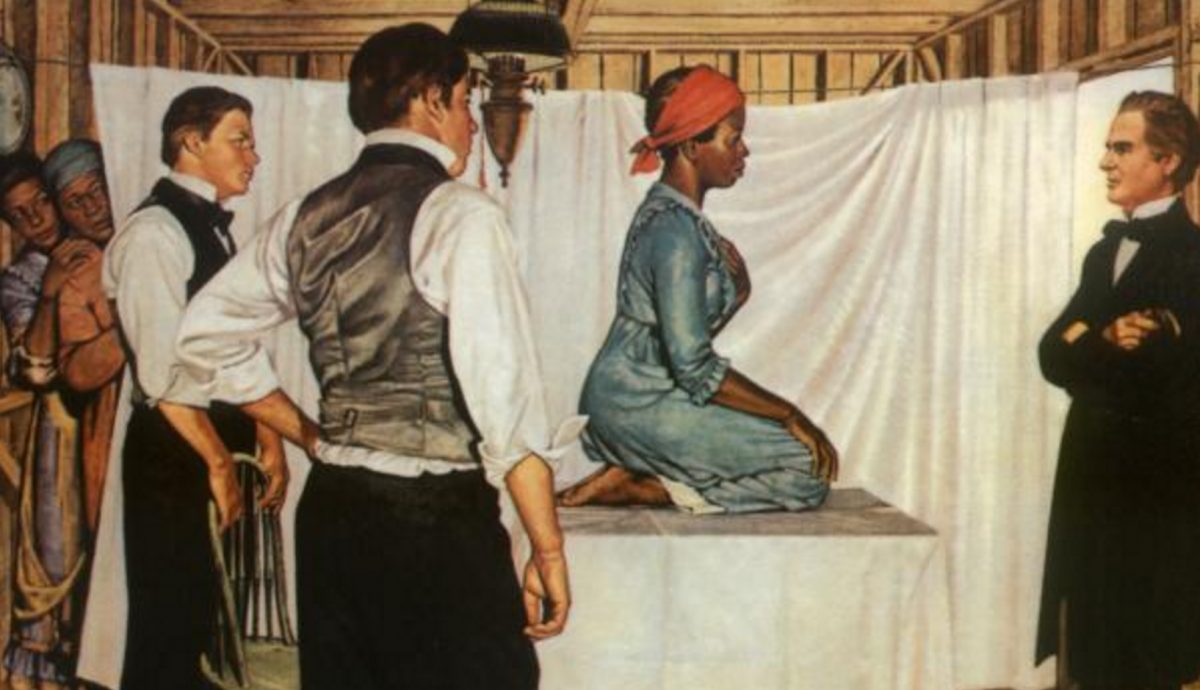
We are in Alabama, in 1844. This is where the first women's clinic in the United States was founded, and James Marion Sims, considered one of the fathers of modern gynecology, worked there. The clinic was located on a plantation, and this whole story begins when a landowner called Sims to treat some of his Black enslaved women. It's important to remember, before continuing, that at the time, gynecological knowledge was extremely rudimentary: bloodletting was used as a universal cure, or female ailments were attributed to psychological causes, particularly the so-called "hysteria" (we discuss it here: Darling, are you hysterical?). As I was saying, it all began when Sims met these Black women and decided to use them as guinea pigs. That's right: not only did he exploit them as labor in his clinic, but he began experimenting on them, studying the countless gynecological problems they faced due to continuous sexual violence and unwanted pregnancies. The results of these experiments provided the necessary data for his research, which later allowed him to publish articles on gynecological diseases and practices. In particular, the most well-known procedures were performed on three women (Anarcha, Betsey, and Lucy) in addition to at least nine other unidentified women, all operated on without anesthesia. You heard that right: without anesthesia, because it was believed that Black people had a higher pain threshold than white people. And, of course, all of this happened without informed consent.
Women's health is a collective achievement
Informed consent is the principle by which every person must be able to freely decide whether or not to undergo a medical treatment or experimentation, after receiving clear, complete, and understandable information. It is the foundation of self-determination in medicine. Its modern formulation originated with the Nuremberg Code (1947), drafted after the trials of Nazi doctors: it establishes that any experimentation on human beings requires "the voluntary consent of the human subject," obtained without coercion and with full awareness of the risks. These principles were reiterated and expanded in the Belmont Report (1979), which centers on the idea that the patient must be informed, aware, and free in their clinical choices.
When we talk about empowerment in health, we are talking exactly about this: the possibility of having access to correct and complete information, thanks to which conscious decisions can be made. Only then are we truly free to choose for our own bodies: this is self-determination. And when we talk about women, trans or non-binary people, but more generally all underrepresented people because they do not fall into the category of adult white Caucasian male, this right becomes even more difficult to exercise, because information is often lacking or not easily accessible.
For all these people, health is a collective achievement, the result of the struggle of many. In the 1960s, for example, Barbara Seaman distributed pamphlets with clear explanations about contraception, prompting the U.S. Senate to convene the "Pill Hearings," during which it was recognized for the first time that women had the right to be informed. From these battles, more structured movements emerged, such as the Women's Health Movement, which centered the importance of access to information as the basis of female empowerment. In 1970, a group of women from Boston Women's Health published a self-produced booklet titled Women and Their Bodies, which in 1973 would become the famous Our Bodies, Ourselves. It was the first women's health manual written by women for women and addressed topics that traditional medicine ignored or treated superficially: the real anatomy of the female body, contraception and abortion, childbirth and motherhood, sexual pleasure, domestic violence, mental health, menopause, and healthcare rights.
Today, these struggles are joined by a new ally: technology.
Technology can become a fundamental tool for empowerment because it offers what has long been missing: immediate, clear, and continuous access to information. Through apps, digital platforms, online services, and virtual communities, people can engage with others' experiences and clarify doubts about their own health. Digital tools also allow for a level of personalization once unthinkable, adapting information to symptoms, age, and living conditions. Furthermore, by breaking down geographical and social barriers, technology allows those living in peripheral or disadvantaged areas to access the same content as those living in more resource-rich contexts. Mackey A, Petrucka P. Technology as the key to women's empowerment: a scoping review. BMC Womens Health. 2021 Feb 23;21(1):78. doi: 10.1186/s12905-021-01225-4. PMID: 33622306; PMCID: PMC7903800.
But not all that glitters is gold.
Technology, especially artificial intelligence increasingly used in medicine, risks not being neutral if it is trained on data that reflects our own cultural and scientific biases.
From previous discussions
To pick up on the discussion from the previous article: for centuries, medicine has been based on a male model and has neglected disease variations in women's bodies, leading to incorrect diagnoses and delays in treatment. A well-known example is heart attack: adequate data on women's hearts is lacking, and in hospitals, a woman with the same symptoms as a man is often dismissed as "anxious," leading to more serious consequences and higher mortality rates. If we train AI on these same distorted data, they will inevitably reproduce the same biases.
Femtech and Empowerment
FemTech emerged in 2016 as technologies dedicated to reproductive and sexual health, primarily through apps that monitor cycles and hormonal phases. Originally, they were conceived almost exclusively for women—a group already largely ignored by traditional medicine. Today, however, this sector is leveraging the potential of inclusivity, opening up services that cater not only to the female universe but to all people underrepresented by medical research, such as trans, non-binary individuals, people of diverse ethnicities, or those from challenging geographical contexts. In practice, it seeks to fill the gaps created by decades of studies based almost solely on the "white Caucasian male" model, introducing a gender-based approach to the development of health technologies. These technologies work precisely because they adopt an approach based on disaggregated data. Take Geen as an example: it collects and analyzes information disaggregated by sex, gender, age, ethnicity, and living and working context. Thanks to these more inclusive and representative datasets, Geen's technology can offer truly tailored solutions. Geen can be integrated into other systems, such as platforms for Local Health Authorities, Hospitals, Clinics, and welfare services, helping people find the most suitable service, saving time and money. Imagine how much easier it could be to search among the services available in your area with Geen's help.