.png)

Gynecological Visit: When to Have One and How to Prepare

Check-ups are essential both when you notice unusual symptoms in your body and for monitoring the health of your reproductive system and for prevention. Furthermore, remember that gynecological visits are a moment dedicated to you, during which you can ask questions about your health and habits, resolve doubts, and get to know yourself better with your gynecologist. Approach your gynecological visit as an opportunity to discuss everything related to your menstrual cycle, contraception, sexuality, menopause, and anything else you need to best manage your life and health, at every stage of your life, with an expert.
A gynecological visit can cause embarrassment; we know that undressing isn't pleasant, and discussing very personal topics with another person can be difficult. It's common to procrastinate, to postpone your appointment because you feel uncomfortable and simply don't want to go. Don't feel guilty about this; it can be normal. However, remember that the professional caring for you is there to help, not to judge you or make you feel embarrassed. A professional approach is non-judgmental and open to dialogue and listening. If this isn't the case, you have the right to change professionals. On Geen, for example, you will only find professionals who prioritize good communication and have an empathetic, non-judgmental approach.
In any case, it's best not to postpone and to book an appointment in a place where you feel safe; the timing of a gynecological check-up can make all the difference in detecting certain issues.
How to prepare for a gynecological visit
You don't need to worry much before a gynecological visit; the most important thing is to write down your symptoms or all the questions you want to ask the professional, so that the visit is as useful as possible for you. Here are some tips:
- Bring your menstrual calendar: You will be asked when your last period was, at what age you had menarche (your first period), if your flow is heavy, and if your cycle is regular.
- Previous exams and issues: If you've had any tests, bring the results with you. If you've had specific issues or surgeries in the past, please mention them.
- Intercourse in the days leading up to the visit: Try to avoid penetrative sexual intercourse in the 24 hours before your visit and the use of tampons, as they could cause micro-lesions, irritation, and alterations to the vaginal microbiome. This is especially important if you need to have a Pap test or an HPV test, as it could affect the results.
- Local treatments and douches: Avoid using topical creams, lubricants, and vaginal douches, as they could cause irritation and alterations to the vaginal microbiome, affecting the results of any gynecological tests.
- Hair Removal: Go to your appointment however you feel most comfortable. No one will judge you for your body's appearance or your aesthetic choices. Your body hair will not compromise your health; approaching the visit calmly and trusting your doctor will help you have a better relationship with your body and your health.
Can you go to your appointment while on your period?
If you're wondering whether it's possible to attend your appointment while on your period, know that many people ask the same question. Generally, yes, you can go to your appointment with your period, especially if you have an urgent concern or if your menstrual flow starts on the day of the visit unexpectedly. Menstrual flow does not hinder an accurate evaluation of your gynecological health; in fact, it can provide useful information about issues such as abnormal bleeding, intense menstrual cramps, or other cycle-related symptoms.
If your visit is urgent or concerns other issues, such as pelvic pain, suspected infections, or other worries that require immediate attention, there's no reason to postpone your appointment due to menstruation; the professional seeing you will know how to manage the situation.
The only time it's best to avoid having your period is if you need to undergo a Pap test or an HPV test. It's recommended to have the test at least 5 days after your period ends, as menstrual blood could obstruct a clear view of cervical cells. If you have an appointment for a Pap test and realize your period is due around that day, it's best to reschedule.
What to Expect: What Happens During a Gynecological Exam
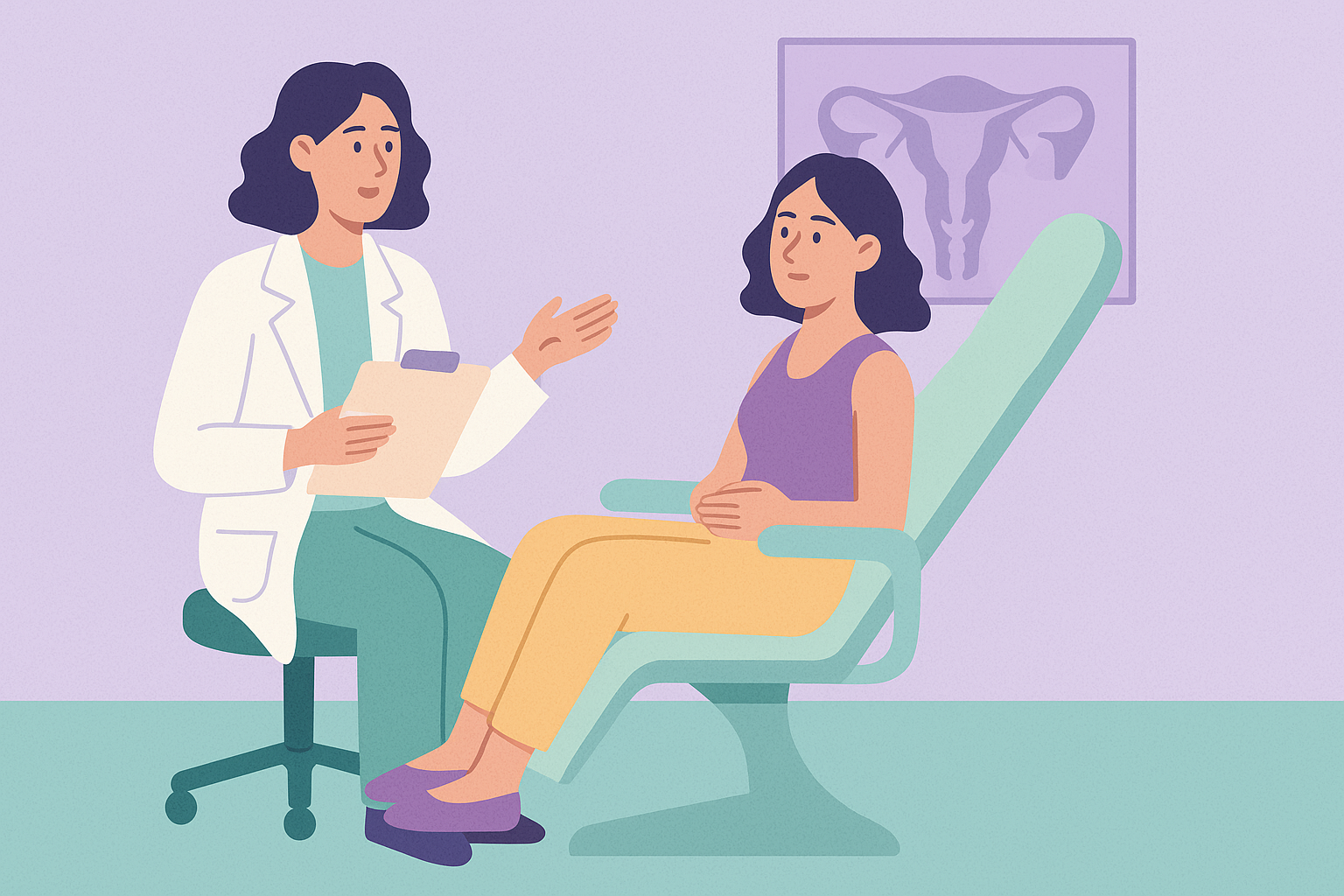
When you arrive at the clinic for your gynecological exam, the first thing that will happen is a consultation, usually at the gynecologist's desk. During this consultation, you'll be asked for some information and can explain the reason for your visit. Afterwards, you can undress; there's usually a screen or curtain to make you feel more comfortable while you prepare, and then you'll move to the examination chair. The stages of an exam are as follows:
- Medical History: Your gynecologist will ask you questions about your medical history, menstrual cycle, and potentially your family history, such as the presence of breast cancer cases. If you don't know all the information, don't worry; just bring what you have. This is also the time when you can explain the reason for your visit, which could be a routine check-up or the presence of specific symptoms.
- Physical Exam: At this point, you'll move to the examination chair. The doctor will check the appearance and condition of your external and then internal genitalia. For external genitalia, a direct observation will be performed; to visualize the vaginal canal and uterine cervix, a speculum, an instrument that dilates the vaginal walls, might be used. To continue the internal vaginal examination and assess the uterus and ovaries, an ultrasound is often used to get a better view of the internal situation. You should not feel pain at any point during the exam; if you are scared, it's your first visit, you've never had penetrative intercourse, or you already know you experience pain during penetration, please discuss it openly. This way, your doctor can evaluate with you whether it's appropriate to use certain instruments, such as deciding not to perform an internal ultrasound but to opt for an external one instead. Generally, in the absence of issues, the exam is painless.
- Pap Test: If necessary, during your check-up, your gynecologist might suggest performing a Pap test. This exam involves inserting a thin swab, with the help of a speculum, into the vagina to collect a small sample of cells from the cervix. The Pap test is essential for preventing cervical cancer and is recommended to be performed regularly.
- Prescriptions and Advice: At the end of the exam, your gynecologist might offer advice, prescribe further tests, or provide medical prescriptions such as medications, supplements, or, if requested, contraceptives.
When to have a gynecological exam and how often.
Even if you don't have any specific symptoms or needs, it's good practice to have an annual gynecological check-up. For a comprehensive evaluation, it's advisable to combine the gynecological exam with a breast exam, including a breast ultrasound from age 20 onwards and, from age 40 onwards, a mammogram. Don't worry, your gynecologist will suggest these tests during your check-up.
However, if you experience symptoms such as unusual vaginal discharge, itching, pain during sexual intercourse, irregular periods, painful or heavy menstruation, or persistent pelvic or abdominal pain, do not delay. This way, you can clarify any doubts or identify and treat any potential issues. These symptoms, in fact, could indicate the presence of a sexually transmitted infection or a condition affecting the uterus or ovaries. Only an examination can provide a clear diagnosis and guide you on treatment or any additional tests needed.